Why the First Five Days Matter: How Workplace Physiotherapy Triage Changes Injury Outcomes
Read more
For years, conventional wisdom in workplace safety held that ample rest and lighter duties prevent injuries. But emerging evidence from sports science and occupational health reveals a paradox: reducing work load (a “deloading” period) can sometimes increase injury risk once normal work resumes. This counterintuitive phenomenon stems from what physiologists call tissue deconditioning – during extended rest, the body’s tissues actually grow weaker and less resilient. When a deconditioned worker abruptly jumps back to full capacity, their muscles, tendons, and ligaments may not withstand the renewed stress, leading to a higher chance of strains, sprains, and other injuries. In other words, in high-demand environments, “rest” isn’t always best.
This article unpacks why return-to-work injury risk can rise after periods of low activity. We’ll explore insights from sports science (including the Australian Institute of Sport’s load management guidelines), real-world parallels in industrial settings, and practical strategies to manage training load in the workplace. By the end, safety professionals will understand why a strategic approach to “reloading” after rest is critical for industrial worker safety – and how to put this knowledge into practice.
“Use it or lose it.” This saying captures the essence of tissue deconditioning. When workers or athletes significantly reduce their activity levels, their bodies begin to detrain. Muscles atrophy (shrink in strength and size), cardiovascular fitness declines, and connective tissues like tendons may stiffen or weaken from disuse. Crucially, these changes happen surprisingly fast. Research shows that it takes as little as two weeks of physical inactivity for a fit individual to lose a significant amount of muscle strength. The more strength and conditioning someone had, the more they stand to lose during an extended break or light-duty period.
Now consider what happens when that person returns to a full workload. The work demands – heavy lifts, repetitive motions, long shifts on foot – remain the same, but the person’s physical capacity has diminished. This mismatch means tasks that used to be routine now strain a deconditioned body. Fatigue sets in quicker, form and technique can slip, and previously easy lifts or movements can push the individual past their current limits. Essentially, the buffer that training and conditioning provide is gone.

A spike in injury risk upon return to work. Joints, muscles, and ligaments that were conditioned to handle stress pre-break are suddenly asked to perform at that level again without adequate reconditioning. It’s a recipe for trouble – unless we manage the return-to-work loading properly. To do that, it helps to borrow lessons from those who know loading best: sports scientists and trainers.
Elite sports have grappled with the balancing act of load management for decades. Coaches walk a fine line: too much training load can cause overuse injuries, but too little load can leave athletes under-prepared and prone to injury when they ramp up again. In fact, recent sports science research has documented a “training–injury prevention paradox.” Athletes who consistently train at higher workloads actually tend to have fewer injuries than athletes who train at lower workloads. In other words, high chronic training loads build a robustness that protects against injury – as long as those loads are increased gradually and intelligently.
Under-training can be just as risky as overtraining. A 2016 review by Tim Gabbett highlighted that while excessive training spikes do cause injuries, insufficient training or long periods of unloading also increase injury risk. When an athlete’s regular workload drops too low, their protective adaptations diminish. If they then suddenly confront a high-intensity game or practice, their acute load (what they’re doing now) far exceeds their chronic load (what they’re adapted to), and injuries often follow. Sports medicine professionals use metrics like the acute: chronic workload ratio to monitor this balance and avoid dramatic spikes in activity.
The Australian Institute of Sport (AIS) has formalized these insights into best-practice guidelines for managing training loads. In an AIS white paper on training load and injury, experts note that “long periods of absolute rest” lead to a detraining effect and reduced physical capacity. When training is reintroduced, if the volume, intensity, or frequency of activity is ramped up faster than the body can adapt, there is a clear “increased risk of injury” during the reloading phase. One key insight from the AIS: the longer the period of reduced workload, the more time must be taken to safely return to full capacity. In practice, an athlete (or by extension, a worker) coming off a three-month hiatus should not be expected to get back to 100% output after just a day or two of normal training – it might take weeks of progressive loading to restore their resilience.
Sports scientists also emphasize holistic load management – maintaining some level of activity during breaks (to retain conditioning) and carefully periodising the return to play. The goal is to avoid the shock of an abrupt transition. These principles translate directly to the workplace.
Do the same load and injury principles hold true for a factory worker or construction crew? Absolutely. Consider the case of the COVID-19 pandemic. In 2020–21, millions of employees experienced extended downtime or remote work. When many experienced employees eventually returned to physically intensive jobs, employers noticed more injuries and safety incidents. A risk analysis by Liberty Mutual’s safety team found that even seasoned workers faced a greater risk of workplace injury upon returning, largely due to worker deconditioning – the loss of fitness and flexibility from a year at home. Essentially, the pandemic created a mass deconditioning event, and its aftermath taught companies a valuable lesson: after long layoffs, you can’t just pick up where you left off.
These insights challenge a long-held assumption in safety management: that if someone is hurting or if work is strenuous, the simple fix is to “just rest.” Certainly, rest and recovery are important – no one is suggesting continuous overwork. But in high-demand environments, too much rest or prolonged light duty can create a false sense of security. Workers may feel fine during the break, only to get injured when normal work resumes, because their bodies lost the conditioning that was quietly keeping them safe.
The traditional mantra “rest is best” is rooted in the idea that rest heals. And in cases of acute injury or exhaustion, rest and recovery are indeed crucial. However, the modern view of injury prevention is more nuanced. In sports medicine and physiotherapy circles, the saying now goes: “Optimal load is best.” This means applying the right amount of stress to tissues – enough to maintain and build strength, but not so much as to cause damage. Prolonged complete rest falls far below the optimal load for an otherwise healthy body, leading to deterioration in capacity.
The key is distinguishing productive rest (which allows recovery and adaptation) from detrimental rest (which overshoots into deconditioning). For safety professionals, this means updating return-to-work philosophies. Rather than assuming any break will refresh a worker, we must ask: “How long has this person been away from full duties, and how can we help their body adjust back safely?”
Taking a page from the coaches’ playbook, workplace safety programs should treat returning employees like athletes coming back from the off-season or injury. Here are some evidence-backed strategies to manage deloading in the workplace and reduce return-to-work injury risk:
Avoid throwing employees straight into 100% of their previous workload after an extended break. Plan a graded return-to-work schedule that increases hours, intensity, or duty difficulty over a period of days or weeks. The AIS advises that the time needed to get back to full capacity should be proportional to the time away. For example, an employee out for three months might spend a couple of weeks on intermediate duties before resuming all tasks.
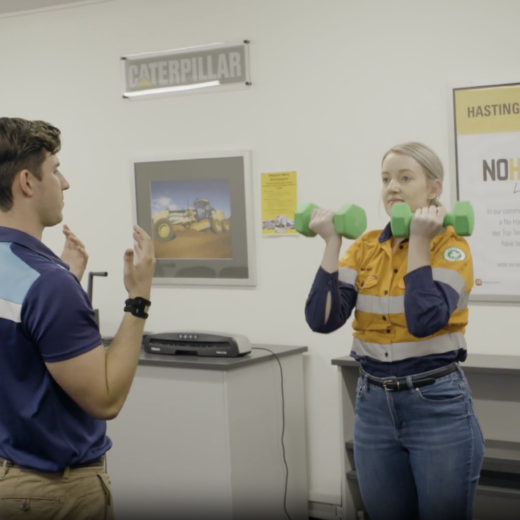
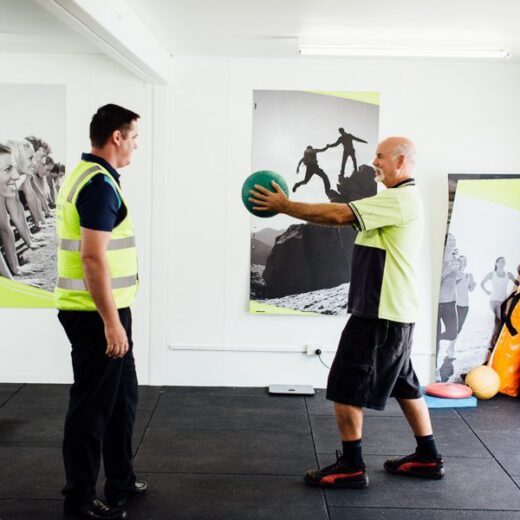
Before resuming high-risk tasks, ensure the worker is fit for task. This might involve a quick functional assessment or strength/endurance test by our occupational Physiotherapists.
Implement work hardening or conditioning programs for employees coming off long absences or injuries. They might include targeted strength training, cardiovascular exercise, and flexibility work to rebuild the worker’s capacity. Gradually building up muscle strength before returning to full capacity is crucial for deconditioned individuals. Think of it as the workplace equivalent of preseason training.
Encourage workers to stay active even while they are away from work. Many companies now educate staff going on extended leave (such as annual holidays or parental leave) about the importance of maintaining some fitness. Simple measures – like home exercise routines, walking, or hobby sports – can make a big difference. An employee who’s kept up some physical activity will return in much better shape than one who spent weeks on the couch, drastically easing their transition back to manual work.
Just as athletes are monitored by trainers, keep an eye on returning workers. Check in on any reports of excessive soreness, fatigue, or difficulty with tasks – these can be red flags of doing too much too soon. Supervisors should be trained to recognize signs of physical overexertion in returning staff. If needed, slow down the ramp-up and provide extra support (for example, rotating tasks, additional help with lifts, etc.) to avoid injuries. It’s better to take a bit more time than to have a setback injury that sidelines the worker again.
Ensure that both managers and employees understand that coming back “deconditioned” is a real safety risk – not a personal failing. Frame it as a physiological fact, just like in sports. This helps garner buy-in for the above measures. When everyone knows why a cautious approach is being taken (to rebuild tissue tolerance and prevent injuries), they’re more likely to follow the plan.
By integrating these practices into return-to-work protocols, companies can mitigate the hidden dangers of deloading. The goal is to strike that “Goldilocks” balance – not too little stress, not too much, but just the right progression to re-condition the worker’s body safely.
Rest will always have its place in the recovery toolbox, but as we’ve seen, context matters. In physically demanding jobs, an extended lull in activity can erode the very capacities that keep workers safe. The next time you hear “rest is best,” remember that rest comes with caveats. A well-rested employee isn’t necessarily a well-prepared employee if their tissues have deconditioned. As a safety professional, you can lead the charge in transforming how your organisation handles returns from leave, illness, or injury. By applying evidence-based training load management principles, you’ll help your team stay resilient and injury-free, even as they transition back to full duty.
This is where Employ Health can assist. Our team specialises in proactive workplace health – from developing gradual return-to-work plans to implementing work conditioning programs tailored to your industry and best in class technology platform. If you’re keen to put these insights into action, book a consult with Employ Health or explore our suite of tools and resources designed to support a safe, sustainable return to work.
Contact us today to ensure that when your employees come back on the job, they’re coming back stronger – not straight into harm’s way.
Read more
The People at Work (PAW) survey has been a widely used tool for assessing psychosocial hazards in Australian workplaces. However, Safe Work Australia has...
Read more
After a long-awaited two-week vacation, a veteran manufacturing worker returns to the production line feeling refreshed. Within days, he wrenches his back lifting a...
Read more
Read more
On the 24th and 25th of October, the EmployHealth tribe from across Australia and New Zealand came together at Surfing Australia in northern NSW...
Read more
A study from an Australian poultry processing plant found that organisational culture — especially safety climate and disability management practices — had a major...
Read more
A 19-year Swedish study of 200,000+ construction workers has confirmed strong links between repetitive manual work and the need for carpal tunnel surgery. Tasks...
Read more
At Employ Health, our values aren’t slogans on a wall — they’re the standards we hold ourselves to every day. And one of our...
Read more
Workplace gyms can boost employee health, morale, and productivity — but they also come with safety and compliance responsibilities. Understanding how to balance wellbeing...
Read more
Read more
In honor of R U OK?Day, Employ Health CEO Matthew Stewart had the privilege of sitting down with Tim Franklin at a special event...
Read more
At Employ Health, we are passionate about building the future of the workplace. That’s why we are proud to be contributing to the undergraduate...
Read moreCan’t find what you’re after?
View all articles