Offshore Pre-Employment Screening
From PALMS recruitment hubs in Papua New Guinea and the Solomon Islands to direct hire from China and New Zealand, the medical, impairment and...
Read more
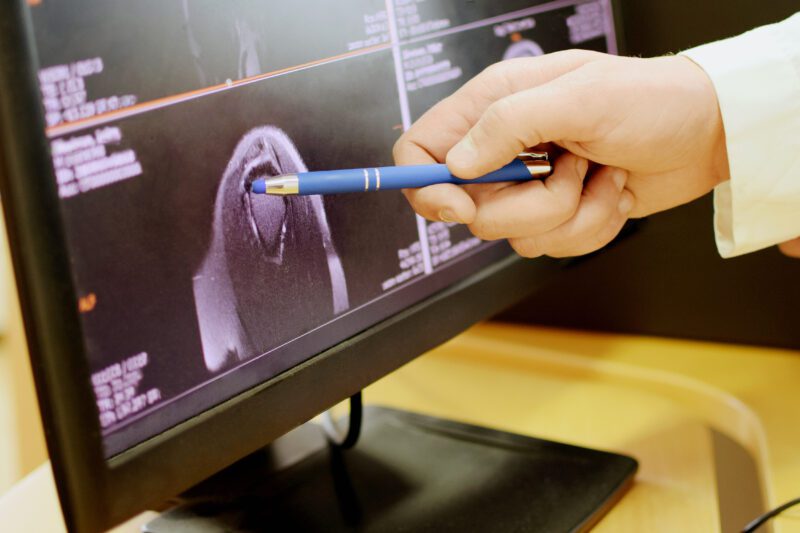
A recent population study published in JAMA Internal Medicine examined MRI findings in over 600 adults aged 41–76.
The results were striking:
The implication is clear: abnormal MRI findings are almost universal after 40 — and poorly correlated with pain or dysfunction.
This challenges one of the most common assumptions in workplace injury management: If the scan shows damage, the work must have caused it.
In reality, imaging often shows age-related structural change — not necessarily a work-related injury.

When shoulder pain occurs at work, imaging is frequently used to determine:
But if nearly everyone has rotator cuff abnormalities — including those without pain — then imaging alone has low diagnostic specificity.
This creates three major risks:
In short: imaging can unintentionally medicalise what is often a modifiable functional condition.
MRI shows structure.
Work capacity depends on function.
Two workers can have identical scans but vastly different:
This is why function-first assessment models consistently outperform imaging-led pathways in occupational health.
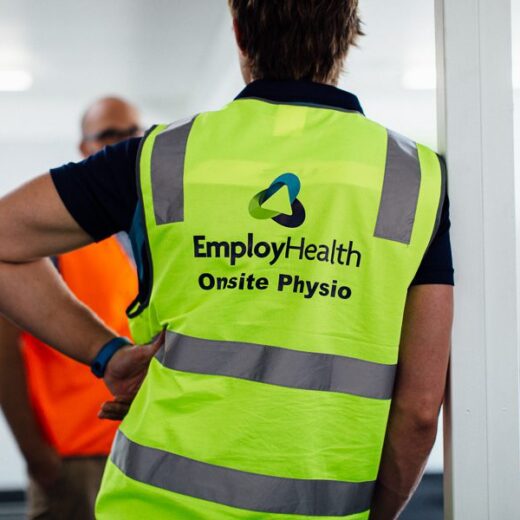
Employ Health’s onsite physiotherapy model is designed specifically to address this structure-function gap.
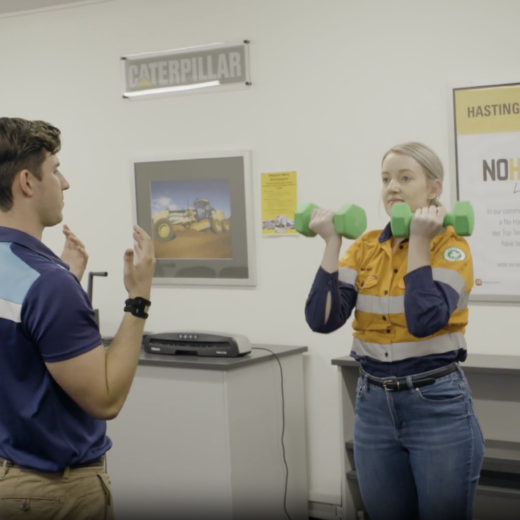
Rather than defaulting to imaging, onsite physios focus on early functional triage inside the workplace.
Early Clinical Triage (Before Imaging)
Onsite physios assess:
This determines whether imaging is even required.
In many cases, it isn’t.
Function-First Assessment
Instead of asking: “What does the scan show?”
We ask: “What can the worker safely do today?”
Assessment includes:
This provides actionable work capacity guidance immediately.
Preventing the Pathology Narrative
Language matters.
When workers hear:
…it can reinforce fragility beliefs.
Onsite physios reframe findings around:
This reduces fear-avoidance and supports continued work participation.
Early Intervention = Better Outcomes
By intervening early, onsite physiotherapy can:
The first days and weeks post-onset are the most modifiable phase of injury.
Exposure-Based Risk Analysis
Workplace shoulder pain rarely occurs in isolation.
Onsite physios assess:
This allows interventions at both:
The takeaway is not that MRI is useless.
Imaging is valuable when there are:
But routine early imaging for atraumatic shoulder pain often adds more noise than clarity.
Forward-thinking organisations are shifting from:
Imaging-Led Model
Pain → Scan → Pathology → Time Loss
to
Function-Led Model
Pain → Onsite Physio → Functional Plan → Stay at Work
This shift reduces both human and financial injury burden.
If nearly every worker over 40 has rotator cuff abnormalities on MRI, then scans alone cannot define injury, causation, or work capacity.
What matters more is:
Onsite physiotherapy delivers its greatest value not by treating scans, but by keeping people working. Contact us to learn more.
From PALMS recruitment hubs in Papua New Guinea and the Solomon Islands to direct hire from China and New Zealand, the medical, impairment and...
Read more
Delayed reporting is the quietest cost driver in workplace injury management. Here’s what the evidence says, and how Employ Health’s Rapid Response™ program is...
Read more
Three rate rises in five months have pushed money worries to the top of the workforce health agenda. Employ Health CEO Matthew Stewart speaks...
Read more
Why Smoke-Free and Vape-Free Blue-Collar Workplaces Make Business Sense
Read more
Opportunities, Risks & How to Make Sense of It 700+ attendees. 70+ speakers. 30+ exhibitors.
Read more
March marks Sleep Awareness Month.It is a time to reflect on one of the most overlooked factors affecting workplace health, safety and productivity: sleep.
Read more
Why overlapping work activities can create hidden safety risks
Read more
What the Latest FDA Update Means for Employers and Health Professionals
Read more
—Why Onsite Physiotherapy Matters More Than Imaging in Workplace Shoulder Pain
Read more
The amendments to the Work Health and Safety Regulation 2011 are now in effect. Since 29 July 2025, PCBUs are required to provide mandatory...
Read more
–What It Means for Employers, Risk and Prevention
Read more
Read more
Can’t find what you’re after?
View all articles