The Future of Wearable Technology in the Workplace
Opportunities, Risks & How to Make Sense of It 700+ attendees. 70+ speakers. 30+ exhibitors.
Read moreWhen a worker develops a musculoskeletal complaint, many focus on “How serious is it?”
There is another really important question to consider – “How quickly did we act?”
Across the research on work-related musculoskeletal disorders (WMSDs), one message is consistent: The earliest phase after symptom onset is the period of greatest leverage.
While many studies group “early” as <7 days, the data consistently shows that the earliest possible intervention group achieves the strongest outcomes. For practical workplace design, this supports setting a high-performance standard of intervention within the first five days, ensuring workers are always captured inside the most biologically and psychologically modifiable phase of injury.
Employ Health’s standard – within 1 hour.
Several authors describe an early “window of opportunity” following a musculoskeletal injury. During this time:
Aasdahl and colleagues describe this concept as a form of “golden hour” for work disability prevention: a short, early period where intervention can redirect recovery before disability behaviours become established. In real workplace terms, this window is measured in days, not weeks. By the time a worker waits for symptoms to “settle,” sees a GP, obtains a referral, and starts treatment, this window has often closed.
Large cohort studies consistently show a graded relationship between timing and outcome:
Mekonnen et al. demonstrated this clearly in Australian workers’ compensation claims: physiotherapy commenced in the earliest period had the strongest association with reduced disability duration, and every delay category resulted in longer work absence.
From a risk-management perspective, setting an absolute minimum <5 day response standard:
5 days should be the absolute minimum. 1 hour is the gold standard.
Traditional systems are slow and reactive:
By then, the opportunity to influence the trajectory is already diminished.
Employ Health partners utilise our Rapid Response Physio service to effectively triage reported injuries within one hour. From there, the effective next steps of management can be determined.
The typical high-performance triage workflow:
This allows organisations to prevent unnecessary claims, prevent harmful delays and match response intensity to real risk.
Triage ensures early intervention is precise, not just fast.

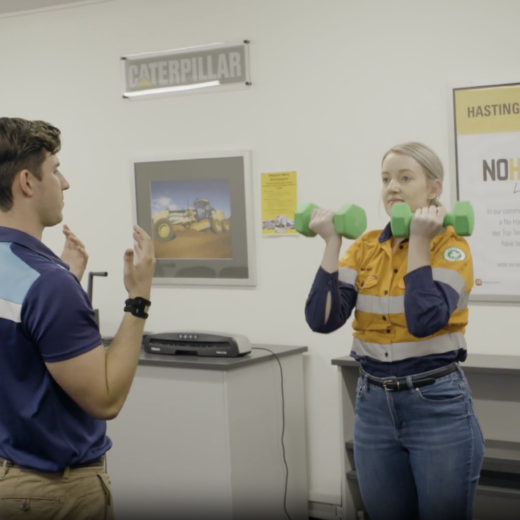
Employ Health’s Rapid Response Physio program and Onsite Health Hubs remove the single greatest barrier to early care: access delay.
When Employ Health programs are embedded in the workplace:
The benefits are clear. Research shows that earlier physiotherapy reduces work disability duration, earlier intervention reduces healthcare utilisation, early supported work participation improves recovery
Onsite physiotherapy transforms early detection into immediate control.
Early intervention is often described as “faster treatment.” In reality, it is more than that. It is also trajectory control.
Once an injury crosses certain thresholds such as time off work, claim activation, escalation into specialist care or entrenched pain behaviours, the system becomes reactive rather than preventative.
Workplace triage and onsite Health Hubs keep injuries in the low-complexity zone, where recovery is simpler, costs are lower, workers remain productive and disability does not embed.
The earlier the system activates, the less injury becomes a “claim” and the more it remains a manageable health risk.
Workplace physiotherapy triage and onsite physiotherapy are not just healthcare services.
They are risk-management systems.
They give organisations:
They move injury management from:
“How do we treat this claim?”
to
“How do we stop this injury from becoming one?”
And it starts by acting inside the first five days.
Opportunities, Risks & How to Make Sense of It 700+ attendees. 70+ speakers. 30+ exhibitors.
Read more
March marks Sleep Awareness Month.It is a time to reflect on one of the most overlooked factors affecting workplace health, safety and productivity: sleep.
Read more
Why overlapping work activities can create hidden safety risks
Read more
What the Latest FDA Update Means for Employers and Health Professionals
Read more
—Why Onsite Physiotherapy Matters More Than Imaging in Workplace Shoulder Pain
Read more
The amendments to the Work Health and Safety Regulation 2011 are now in effect. Since 29 July 2025, PCBUs are required to provide mandatory...
Read more
–What It Means for Employers, Risk and Prevention
Read more
Read more
Secondary psychological injury often emerges during physical injury recovery — not from the original workplace event, but from uncertainty, leadership response and system design....
Read more
Read more
The People at Work (PAW) survey has been a widely used tool for assessing psychosocial hazards in Australian workplaces. However, Safe Work Australia has...
Read more
After a long-awaited two-week vacation, a veteran manufacturing worker returns to the production line feeling refreshed. Within days, he wrenches his back lifting a...
Read moreCan’t find what you’re after?
View all articles