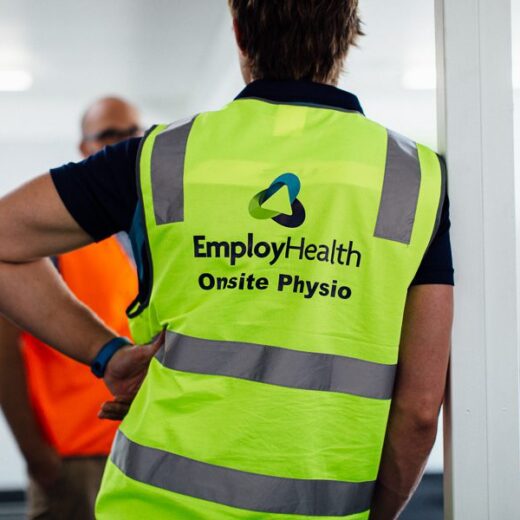
 Onsite Physiotherapy
How Much Does an Onsite Physiotherapist Cost?
How Much Does Onsite Physiotherapy Cost? If you’ve searched this question, you’ve probably already spoken to a few providers and come away more confused than...
Read more
The nature of shoulder pain can vary greatly, influenced by factors such as job type, workload, and workplace ergonomics. Common causes include:
Frequent in roles requiring repetitive tasks, such as data entry, packing, or assembly work.
Common in industries such as construction and warehousing, where lifting and manual labour are routine.
A significant issue for office workers and others who spend long periods in fixed positions or with poor posture.
Sudden injuries from falls or impacts can lead to severe shoulder conditions requiring immediate intervention.
Tailored to meet the needs of your Sydney based workplace, Employ Health delivers onsite physiotherapy services. Our experienced workplace health physiotherapists provide targeted care at your place of work, focusing on both treatment and preventive strategies to address shoulder pain.
Learn MoreImportant in preventing the progression of shoulder issues, our early intervention services ensure that signs of discomfort are proactively addressed, facilitating effective recovery.
Learn MoreOur comprehensive screenings assess the physical readiness of potential employees for specific roles, identifying susceptibility to shoulder injuries. This proactive approach aids in job matching, significantly reducing the risk of work-related shoulder pain.
Learn MoreEmploy Health’s customised rehabilitation programs are designed to support your Sydney workers in recovering from shoulder injuries. By focusing on restoring strength and mobility, you facilitate a safer and more confident return to work.
Learn MoreWe evaluate the physical demands of various job roles against the capabilities of workers, ensuring a capacity fit that minimises the risk of shoulder injuries. This is an important service to maintain a healthy balance between job requirements and worker health.
Learn MoreOur ergonomic assessments cater to your Sydney’ based work setting where we provide practical recommendations to improve workplace design and practices. Coupled with worker training on optimal posture and ergonomic practices, we aim to significantly reduce incidents of shoulder pain in your workplace.
Learn MoreShoulder pain is a significant barrier to the health and productivity of your workforce. With Employ Health’s targeted approach, combining workplace health physiotherapy, preventive measures, and ergonomic interventions, you will be setting your business up for success to improve the well-being and productivity of your Sydney based workforce.
Reach out today to discover how we can help alleviate shoulder pain within your workforce, fostering a more vibrant, productive, and healthy work environment.
Onsite Physiotherapy
How Much Does Onsite Physiotherapy Cost? If you’ve searched this question, you’ve probably already spoken to a few providers and come away more confused than...
Read more Explainable AI
Explainable AI : If Your AI Can’t Explain Itself, You’re the One Liable By Employ Health | Workplace Health & Safety Artificial intelligence is moving fast...
Read more Toolbox Talks
Simple techniques to make toolbox talks more engaging, encourage participation, and help important safety messages cut through workplace autopilot. Every Conversation Shapes Your Culture: How to...
Read more Risk
Risk
Remote Work, Isolation, and Mental Health Most Australian businesses have done the work on remote work ergonomics. Standing desks, monitor heights, chair assessments — the...
Read more Workforce Risk Intelligence
The Future of Pre-Employment Screening For decades, pre-employment assessments have largely been descriptive: They document baseline function. They confirm compliance. They tell you whether someone meets minimum role...
Read more
AI in workplace health: The High Cost of Workplace Injuries and the Need for Innovation Workplace injuries carry a tremendous human and financial cost. In...
Read more
Contractor vs full-time workplace health is a decision many organisations make based on hourly rates alone. But when you look beyond the upfront cost,...
Read more
From PALMS recruitment hubs in Papua New Guinea and the Solomon Islands to direct hire from China and New Zealand, the medical, impairment and...
Read more
Delayed reporting is the quietest cost driver in workplace injury management. Here’s what the evidence says, and how Employ Health’s Rapid Response™ program is...
Read more
Three rate rises in five months have pushed money worries to the top of the workforce health agenda. Employ Health CEO Matthew Stewart speaks...
Read more
Why Smoke-Free and Vape-Free Blue-Collar Workplaces Make Business Sense
Read more Opportunities, Risks & How to Make Sense of It 700+ attendees. 70+ speakers. 30+ exhibitors.
Read moreCan’t find what you’re after?
View all articles