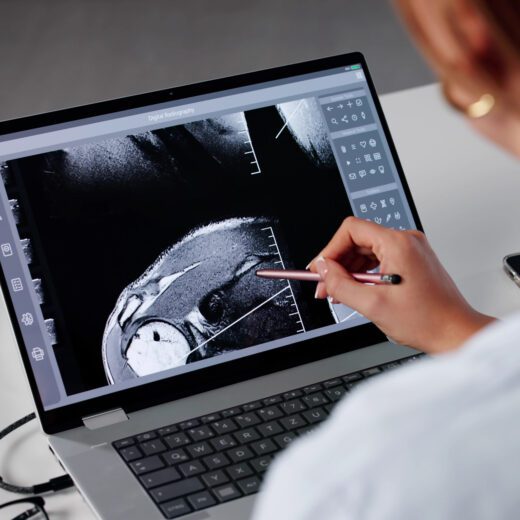
When MRI Findings Don’t Equal Injury
—Why Onsite Physiotherapy Matters More Than Imaging in Workplace Shoulder Pain
Read more
Healthcare data breaches are alarmingly common and can have severe consequences. Sensitive health information is highly valuable to cybercriminals, making healthcare organizations prime targets for cyber-attacks. The risk is compounded by the increasing digitization of health records and the widespread sharing of digital health information between providers and businesses.
A data breach can have far-reaching implications for businesses and their employees:

When employee health information is compromised, it can lead to a significant loss of trust in the employer and the healthcare provider, damaging internal relationships and employer branding.

Data breaches often come with hefty costs, including legal fees, fines, and expenses related to mitigating the breach and preventing future incidents.

For workers, a breach can mean stress and anxiety due to potential misuse of their sensitive health information.
In Australia and New Zealand, the handling of personal and health information by workplace healthcare providers is governed by stringent laws. Australian Privacy Act 1988 (Cth): This act includes principles that dictate how personal information should be collected, used, and disclosed, emphasizing the security of the data and the rights of individuals to access their information.
Providers must take reasonable steps to protect the personal information they hold from misuse, interference, loss, unauthorized access, modification, or disclosure. For health information, this might involve secure storage systems, data encryption, and secure communication channels.
Similar to Australia, this act sets out principles that ensure personal information is kept safe and secure from unauthorized access and misuse.
At Employ Health, we are committed to upholding the highest standards of data security to protect our partners and their employees. Our compliance with the Australian Privacy Act 1988 and the New Zealand Privacy Act 1993 is just the beginning:
We employ advanced cybersecurity measures to safeguard all data, including regular audits, state-of-the-art encryption, and secure data handling practices.
Our security protocols are continually revised to adapt to new threats, ensuring that we remain at the forefront of data security technology.
We believe in complete transparency with our partners regarding our data handling practices, enabling them to have full confidence in our commitment to security.
Choosing a workplace healthcare provider with robust digital security practices is not just a regulatory requirement but a crucial component of protecting the health and well-being of employees. Employ Health’s proactive and compliant approach to digital security ensures that our partners can trust us with their most sensitive data, allowing them to focus on what matters most — the health and productivity of their workforce.
—Why Onsite Physiotherapy Matters More Than Imaging in Workplace Shoulder Pain
Read more
The amendments to the Work Health and Safety Regulation 2011 are now in effect. Since 29 July 2025, PCBUs are required to provide mandatory...
Read more
–What It Means for Employers, Risk and Prevention
Read more
Read more

Secondary psychological injury often emerges during physical injury recovery — not from the original workplace event, but from uncertainty, leadership response and system design....
Read more
Read more

The People at Work (PAW) survey has been a widely used tool for assessing psychosocial hazards in Australian workplaces. However, Safe Work Australia has...
Read more
After a long-awaited two-week vacation, a veteran manufacturing worker returns to the production line feeling refreshed. Within days, he wrenches his back lifting a...
Read more
Read more

On the 24th and 25th of October, the EmployHealth tribe from across Australia and New Zealand came together at Surfing Australia in northern NSW...
Read more
A study from an Australian poultry processing plant found that organisational culture — especially safety climate and disability management practices — had a major...
Read more
A 19-year Swedish study of 200,000+ construction workers has confirmed strong links between repetitive manual work and the need for carpal tunnel surgery. Tasks...
Read moreCan’t find what you’re after?
View all articles