
The Future of Wearable Technology in the Workplace
Opportunities, Risks & How to Make Sense of It 700+ attendees. 70+ speakers. 30+ exhibitors.
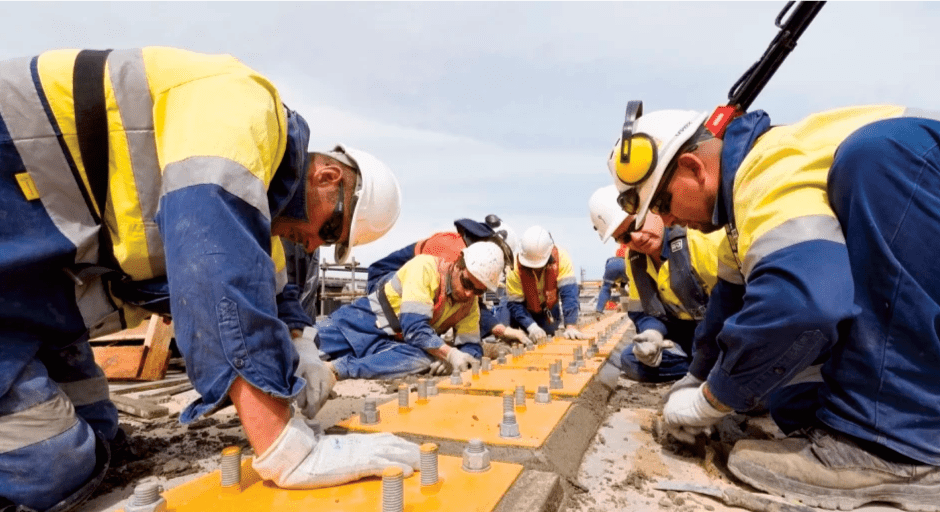
Read moreOur team of qualified workplace health physiotherapists work with you to design bespoke services that are implemented to improve the techniques of your construction workers and reduce injuries in your construction environment. Some of these injuries can include injuries related to the back, shoulders, knees, and wrists, as well as repetitive strain injuries and conditions caused by prolonged physical activity.
A construction task-specific ergonomic assessment conducted by Employ Health includes:
The frequent lifting, carrying, or moving of heavy items that can result in musculoskeletal injuries.
Extended periods construction workers spend on their feet, leading to lower back and leg discomfort or injuries.
Reaching overhead, bending, or twisting frequently, which can strain muscles and joints.
Examining the methods used in construction tasks and suggesting improvements to reduce the risk of injury.
Assessing the construction site layout and working conditions to identify ergonomic risks and recommend enhancements.
This targeted approach helps identify potential hazards and through a targeted strategy we implement practical solutions to mitigate your risks, supporting you to provide a healthier, safer and more productive construction site.
Ergonomic hazards in construction environments can significantly impact workers’ health and safety. These hazards can include:
Tasks involving the lifting, carrying, or moving of heavy materials that can lead to back and shoulder injuries.
Activities requiring workers to bend or stoop for extended periods, increasing the risk of musculoskeletal disorders.
Repetitive tasks, such as hammering or drilling, which can lead to repetitive strain injuries.
Working in unstable or confined positions that can lead to falls or overexertion injuries.
Operating heavy machinery that causes vibration can lead to conditions such as hand-arm vibration syndrome, while excessive noise can lead to hearing loss and increased stress.
By proactively addressing these construction-specific challenges, Employ Health's ergonomic assessments will help you create a safer, more productive working environment.
Our ergonomic assessments will be customised specifically for your construction environment with considerations including:
Reviewing and recommending improvements for lifting methods, carrying and moving materials to reduce or eliminate injury risks.
Evaluating the use of tools and machinery to recommend ergonomic solutions that reduce strain and enhance safety.
Providing recommendations for the layout and design of workstations within your construction site to improve ergonomics and reduce hazards in your workplace.
Implementing ergonomic solutions in your construction environment is likely to assist with:
By partnering with Employ Health for your Construction Task Specific Ergonomic Assessments you are setting your construction environment up for success to be a healthier, safer, and more productive workplace. Contact Employ Health today.
Opportunities, Risks & How to Make Sense of It 700+ attendees. 70+ speakers. 30+ exhibitors.
Read more
March marks Sleep Awareness Month.It is a time to reflect on one of the most overlooked factors affecting workplace health, safety and productivity: sleep.
Read more
Why overlapping work activities can create hidden safety risks
Read more
What the Latest FDA Update Means for Employers and Health Professionals
Read more
—Why Onsite Physiotherapy Matters More Than Imaging in Workplace Shoulder Pain
Read more
The amendments to the Work Health and Safety Regulation 2011 are now in effect. Since 29 July 2025, PCBUs are required to provide mandatory...
Read more
–What It Means for Employers, Risk and Prevention
Read more
Read more
Secondary psychological injury often emerges during physical injury recovery — not from the original workplace event, but from uncertainty, leadership response and system design....
Read more
Read more
The People at Work (PAW) survey has been a widely used tool for assessing psychosocial hazards in Australian workplaces. However, Safe Work Australia has...
Read more
After a long-awaited two-week vacation, a veteran manufacturing worker returns to the production line feeling refreshed. Within days, he wrenches his back lifting a...
Read moreCan’t find what you’re after?
View all articles